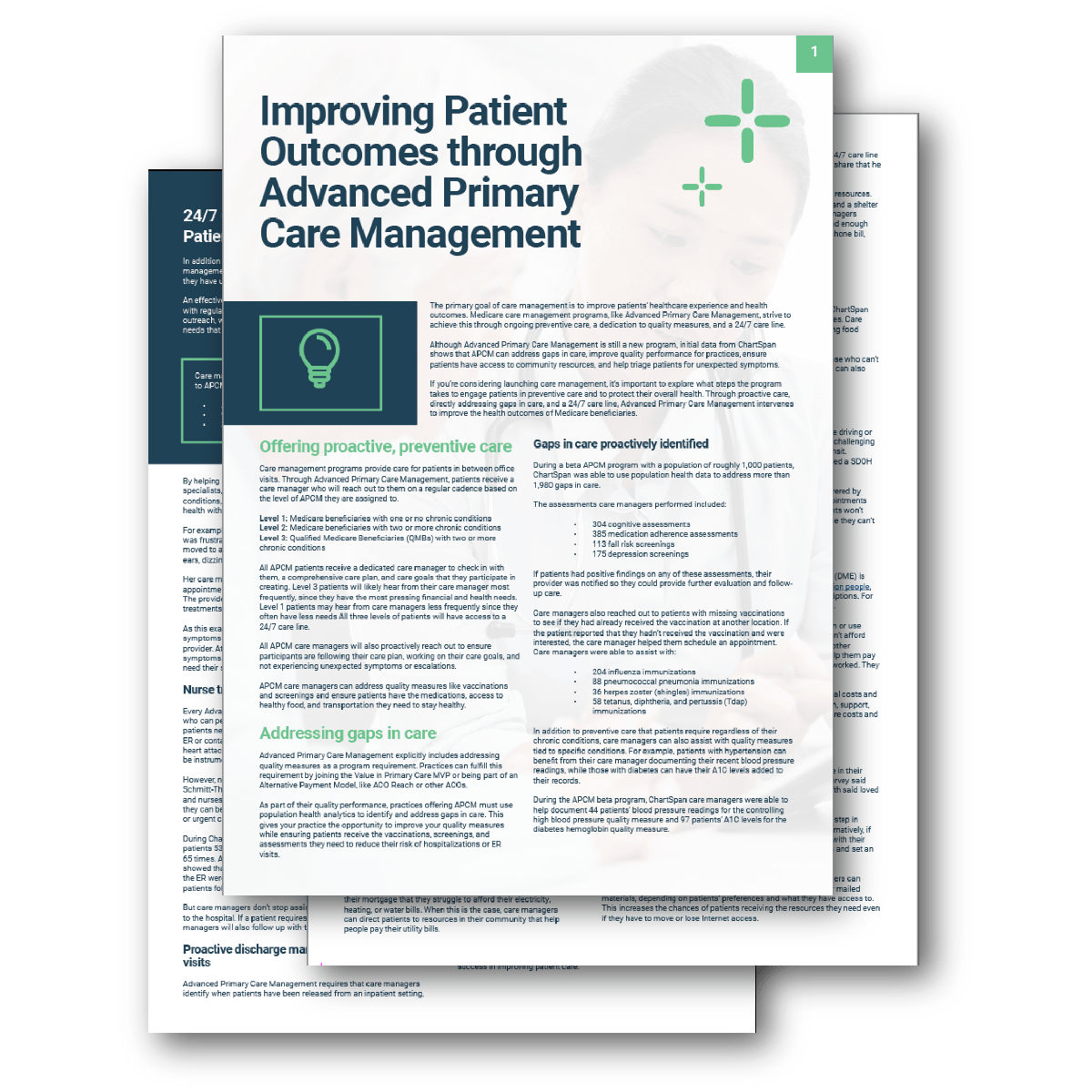

Talk with a ChartSpan Representative Today!
Our team is ready to help you improve patient care and outcomes.
Blog
How Proactive Care Management Addresses Care Gaps in High-Risk & Rising-Risk Populations

Care gaps such as missed screenings, unmanaged chronic conditions, lapses in follow-up, and barriers to access tend to concentrate among patients with the most complex needs. High-risk patients often require ongoing coordination across multiple providers, which can easily become disjointed. And although rising-risk patients may appear stable, many are trending toward more serious health issues.
When care gaps go unaddressed, patients are more likely to experience preventable complications, emergency department visits, and hospitalizations.
Proactive care management offers a way to address these gaps earlier and more consistently. By maintaining regular touchpoints with patients, monitoring changes over time, and intervening before conditions worsen, care teams can better support high-risk patients while preventing escalation among rising-risk populations. The result is more coordinated care, better outcomes, and a more sustainable approach to managing chronic disease at scale.
What is proactive care management?
Proactive care management is a preventive approach to healthcare that emphasizes early identification, ongoing engagement, and continuous support, particularly for patients with chronic conditions or elevated risk. Rather than waiting for symptoms to worsen or patients to seek help, care teams take an active role in monitoring health status, addressing gaps, and reinforcing preventive care over time.
Proactive care management includes several core components:
- Care planning that aligns clinical goals with patient priorities
- Routine check-ins and preventive screenings to catch issues early
- Ongoing monitoring of chronic conditions and health status
- Patient education that supports understanding and self-management
- Chronic condition management focused on stability and prevention
This approach transforms care from a series of isolated encounters into an ongoing conversation. Regular outreach helps patients stay on track with medications, appointments, and lifestyle changes, while allowing care teams to identify emerging concerns before they escalate. In practice, proactive care management supports better treatment adherence, reduces avoidable utilization, and improves both patient experience and retention—while also aligning with value-based care goals focused on quality and cost containment.
Proactive vs. reactive care
Healthcare delivery often falls into one of two models: reacting to problems after they arise or working to prevent them in the first place.
Reactive care is designed to respond when a patient’s condition has already worsened. Care teams intervene after symptoms escalate, often resulting in urgent visits, hospitalizations, or intensive treatment plans that could have been avoided with earlier support.
Proactive care instead focuses on identifying and addressing issues before they become acute. Through regular check-ins, monitoring, and preventive outreach, care teams are able to recognize subtle changes—such as declining medication adherence, missed screenings, or early symptom progression—and take action sooner. This allows for timely adjustments to care plans, education, or follow-up without waiting for a crisis to trigger intervention.
For patients with chronic conditions, a reactive model often leads to cycles of stabilization and relapse. Proactive care helps break that pattern by supporting consistency between visits and reinforcing preventive behaviors over time. Rather than concentrating resources solely on urgent events, proactive care shifts the focus toward maintaining stability, reducing avoidable utilization, and supporting better long-term outcomes, especially for high- and rising-risk populations.
Why proactive care matters for high-risk and rising-risk populations
High-risk and rising-risk patients face different challenges, but both benefit significantly from proactive care management. High-risk patients often live with multiple chronic conditions and see several providers, making care coordination and follow-through essential to avoiding complications. Rising-risk patients, on the other hand, may have one or two conditions that are currently manageable but show early signs of progression.
Rising-risk patients are especially vulnerable to care gaps. Because their symptoms may be mild or intermittent, they may interact with the healthcare system less frequently, miss preventive screenings, or delay follow-up care. Over time, those small gaps can compound, leading to disease progression, reduced quality of life, and eventual escalation into high-risk status.
Proactive care management helps address this challenge by maintaining consistent patient engagement before deterioration occurs. Regular monitoring, education, and preventive outreach reinforce healthy behaviors, support adherence, and surface issues that might otherwise go unnoticed.
Some care management programs, like Chronic Care Management (CCM), specifically target patients who already have two or more chronic conditions. Others, like Advanced Primary Care Management (APCM), are open to patients regardless of their number of chronic conditions.
For high-risk patients, proactive care provides the coordination and continuity needed to manage complex needs effectively. For rising-risk populations, it creates an opportunity to intervene earlier, stabilize conditions, and prevent avoidable escalation—improving patient outcomes, clinical efficiency, and practice profitability.
7 ways proactive care management addresses care gaps
Care gaps rarely stem from a single missed visit or overlooked task. More often, they develop gradually—when patients fall out of routine care, warning signs go unnoticed, or follow-up gets lost between encounters.
Proactive care management is designed to address these gaps by maintaining continuous visibility into patient needs and intervening before small issues become costly or clinically significant. For high- and rising-risk populations in particular, this approach helps care teams stay ahead of potential issues rather than reacting to more severe episodes.
1. Identifies unmet clinical needs before they escalate
Proactive care management creates regular opportunities to identify early warning signs, such as worsening symptoms, changes in self-management, or new concerns that patients may not otherwise report. These insights often surface during routine check-ins, structured assessments, or follow-up conversations that occur outside of traditional appointments.
By identifying these unmet needs early, care managers can escalate concerns to providers while there is still time to intervene. This may involve coordinating follow-up visits, revisiting care plans, or addressing issues before they lead to complications, ED use, or hospital admissions. Over time, this early identification helps shift care from crisis response to stabilization and prevention.
2. Uses risk stratification to prioritize outreach
Healthcare is most efficient when support is matched to patient need. Risk stratification allows care teams to segment patient populations based on clinical complexity, utilization patterns, and other indicators of risk, ensuring that outreach is focused where it can make the greatest impact. This approach recognizes that risk is dynamic and that patient needs can change over time.
Through ongoing assessment and stratification, care managers can adjust the frequency of outreach as patients stabilize or decline. High-risk patients may require frequent check-ins and close coordination with providers, while rising-risk patients may benefit from preventive interventions and education. This structured prioritization helps practices allocate resources more effectively while avoiding a one-size-fits-all approach to care.
3. Surfaces social and behavioral factors that influence risk
Clinical data alone rarely tells the full story. Social Determinants of Health (SDOH), such as access to transportation, food security, housing stability, health literacy, or medication affordability, can significantly influence a patient’s ability to follow care plans and manage their health. These factors often contribute directly to a patient’s risk level and the persistence of care gaps.
Proactive care management creates consistent opportunities to uncover these barriers through conversation and relationship-building. Once identified, care managers can document these challenges, share insights with the broader care team, and help connect patients to appropriate resources. Addressing these non-clinical drivers of health improves engagement, supports adherence, and reduces the likelihood that unresolved social needs will lead to worsening outcomes.
4. Builds continuity between fragmented care encounters
From primary care visits to hospitalizations to specialist referrals, healthcare is often delivered in separate episodes, leaving patients responsible for navigating what happens next. Proactive care management helps connect these touchpoints by maintaining continuity across encounters and transitions of care. This prevents important information, follow-up tasks, and treatment plans from falling through the cracks after a visit.
Care managers act as a consistent point of contact, reinforcing next steps, tracking referrals, and checking in after transitions such as hospital discharges. This ongoing presence helps reduce confusion, duplication, and missed follow-through, while giving providers greater confidence that care plans are being carried out between visits.
5. Strengthens medication and care plan adherence
Even with personalized care plans, treatment adherence can be challenging—particularly for patients managing multiple conditions or medications. Proactive care management reinforces adherence by providing education, answering questions, and addressing barriers such as side effects, cost concerns, or misunderstandings about instructions.
Regular check-ins allow care managers to identify adherence issues early and collaborate with providers to make adjustments when needed. This support helps patients stay aligned with their treatment plans, reduces preventable complications, and improves the effectiveness of prescribed medications.
6. Prevents rising-risk patients from becoming high-risk
Rising-risk patients are often overlooked: they may not yet meet criteria for intensive intervention, but early indicators suggest increasing instability. Proactive care management plays a critical role at this stage by addressing emerging issues before they accelerate. This may include following up on overdue screenings, monitoring chronic conditions more closely, or supporting lifestyle changes that reduce future risk.
By maintaining consistent engagement with rising-risk patients, care teams can intervene earlier, slow disease progression, and reduce avoidable utilization. This approach not only improves patient outcomes but also helps practices manage population health more sustainably by preventing escalation rather than responding to it.
7. Reduces missed preventive and routine screenings
Preventive and routine screenings are often overlooked when patients disengage or prioritize acute concerns. Proactive care management helps address these gaps by tracking which recommended screenings are due and prompting timely outreach. Care managers can remind patients about upcoming screenings, explain their importance, and help coordinate scheduling.
This consistent attention ensures that preventive care remains a prioritized part of the patient’s healthcare rather than an afterthought. Over time, improved screening adherence supports earlier detection, better chronic condition management, and more favorable outcomes, especially for patients at higher risk.
How to manage care proactively with ChartSpan
Beyond risk stratification, proactive care management requires sustained engagement, consistent follow-through, and close coordination between providers, specialists and other clinical staff involved in a patient’s care. Programs like Chronic Care Management and Advanced Primary Care Management are designed to support proactive care, but successful implementation depends on having the right care team and processes in place.
ChartSpan supports practices by extending the care team with dedicated care managers who work alongside clinicians to operationalize CCM and APCM workflows. Through structured outreach and ongoing monitoring, ChartSpan helps practices track patient progress, address care gaps, and reinforce care plan adherence between visits.
In APCM specifically, ChartSpan supports risk stratification to help practices identify high- and rising-risk patients and tailor outreach based on clinical complexity, preventive needs, and emerging risk factors—allowing care teams to intervene earlier and more consistently. However, both CCM and APCM are well-equipped to support ongoing care.
For example, a patient with hypertension reported a blood pressure reading of 140/98 during routine monitoring. Working together, the patient and his ChartSpan care manager developed a care plan with clear goals focused on lowering blood pressure. His care manager helped him coordinate follow-up appointments with his provider and provided education on lifestyle changes, including diet, physical activity, and stress management. In just five months, the patient’s blood pressure improved to 120/72—and continued to stabilize at 120/70 after eight months.
This type of outcome reflects what CCM and APCM are designed to support: ongoing guidance, reinforcement, and coordination that extends beyond episodic encounters. By maintaining regular touchpoints and supporting behavior change over time, care managers help ensure that care plans translate into measurable progress.
By handling key components of proactive care—such as risk stratification, routine outreach, care plan reinforcement, and documentation—ChartSpan allows providers to stay informed without multiplying administrative burden. Care managers share meaningful updates with clinicians, while providers can also communicate changes or concerns back to the care team. This collaborative approach creates a more connected care experience for patients and a more sustainable model for managing high- and rising-risk populations.
Talk to an expert to learn how partnering with ChartSpan can help your organization deliver proactive, coordinated care that addresses gaps earlier and improves outcomes for high-risk and rising-risk patients.
You may also like:
Subscribe for More Insights
Get valuable resources delivered straight to your inbox.
"*" indicates required fields