
Talk with a ChartSpan Representative Today!
Our team is ready to help you improve patient care and outcomes.
Blog
How a Hybrid Care Model Improves Continuity and Supports Recurring Revenue

Most conversations about a hybrid care model start with telehealth: how many video visits a practice offers, which platform it uses, and whether patients prefer phone or video. These are reasonable operational questions, but they miss a consequential one. What happens to patients between visits, and does your practice have a structured way to support them during that time?
For Medicare patients managing chronic conditions, the space between appointments is where outcomes are largely determined. Medication adherence, symptom changes, and care plan follow-through do not happen in the exam room. They happen at home, over weeks and months, often without any clinical contact at all.
A hybrid care model addresses this directly. By combining in-person care, telehealth, and ongoing remote care management, it creates a connected care experience that does not pause when a patient leaves the office. Programs like Chronic Care Management (CCM), Advanced Primary Care Management (APCM), and Remote Patient Monitoring (RPM) provide both the operational structure and the reimbursement foundation to make that continuity sustainable.
What is a hybrid care model?
A hybrid care model is a coordinated approach to care delivery that integrates in-person visits, telehealth, and remote care management into a single, continuous care experience. The goal is not simply to give patients more ways to access their provider. It is to ensure that clinical support continues between visits.
For practices managing Medicare patients with chronic conditions, that distinction is significant. A few office visits per year cannot sustain effective management of hypertension, diabetes, or heart failure on their own. A functional hybrid care model fills that gap with structured, ongoing engagement that keeps patients connected to their care team year-round.
The three components of hybrid care
Hybrid care is built on three distinct layers, each serving a different clinical function within a longitudinal care model.
In-person care
In-person visits are the anchor of the model. Physical examinations and diagnostic procedures generally require face-to-face interaction, and these encounters are also where the provider-patient relationship is established and where complex clinical decisions are made.
In a hybrid model, in-person visits do not become less important. They become more purposeful. Because ongoing remote engagement handles routine monitoring and follow-up, office visits can be reserved for the clinical work that genuinely requires them.
Telehealth
Telehealth, including video and phone visits, serves as a flexible layer for follow-up appointments, medication reviews, and lower-complexity care. It also reduces barriers for patients who face transportation challenges or scheduling constraints, making it easier to maintain contact without requiring an office visit.
Telehealth is a valuable component of hybrid care, but it is not what defines it. Adding video visits to a practice's scheduling options does not create a hybrid care model. Telehealth addresses access; it does not, on its own, address continuity.
Remote care management
Remote care management is the continuous layer that most directly addresses the between-visit gap. This includes programs like Chronic Care Management (CCM), Advanced Primary Care Management (APCM), and Remote Patient Monitoring (RPM), as well as structured patient outreach, care coordination, care plan reinforcement, and medication adherence support.
Unlike in-person visits or telehealth appointments, remote care management does not require a scheduled encounter. It operates continuously, through monthly outreach calls, remote monitoring data review, and ongoing coordination across providers and settings. This is also the layer that generates recurring reimbursement under Medicare, making it the financial foundation of a sustainable hybrid model.
For practices evaluating how to operationalize that work without expanding internal staffing or infrastructure, ChartSpan’s Chronic Care Management (CCM) and Advanced Primary Care Management (APCM) programs provide a structured way to maintain outreach, documentation, and coordinated care between visits.
How hybrid care differs from telehealth
Telehealth is a visit modality. Hybrid care is a longitudinal care system. The distinction matters operationally, and conflating the two leads to a common implementation gap.
A practice that adds telehealth scheduling has expanded its access options, but it has not built the infrastructure for ongoing patient engagement.
Between telehealth visits, patients with chronic conditions are still largely on their own. There is no structured outreach, no remote monitoring, and no care coordination unless a program like CCM, APCM, RPM, or another structured care management workflow is in place to provide it.
A hybrid care model requires all three layers working in concert. The in-person visit establishes the relationship. Telehealth provides flexibility for follow-up and low-acuity needs. Remote care management sustains the connection between encounters, creating the continuity that chronic disease management actually requires.
Why continuity of care determines patient outcomes
Medicare patients with multiple chronic conditions may see their primary care provider a handful of times per year. The rest of the year unfolds without any structured clinical contact. Most health outcomes are shaped by what happens during that time.
What continuity of care means in practice
Continuity of care is not about frequency of visits alone. It is about whether a patient's care team has ongoing visibility into their status, and whether that visibility enables timely action.
For patients managing two or more chronic conditions, continuity means that care plan adherence is being monitored, that medication changes are followed up on, and that a care coordinator is available when questions or concerns arise between appointments. A few annual visits, even well-executed ones, cannot provide that on their own.
For healthcare administrators and practice leaders, hybrid care becomes an operational question, not just a clinical one. If your team does not have the capacity to sustain outreach, care coordination, and documentation month after month, continuity becomes difficult to maintain consistently. Programs like ChartSpan’s CCM and APCM are designed to support that between-visit work while helping your practice maintain Medicare compliance and program performance.
How a hybrid care model improves continuity between visits
More frequent and meaningful clinical touchpoints
Traditional primary care may involve relatively few office visits per year for a patient with chronic conditions. A hybrid care model changes that significantly. Monthly CCM outreach, APCM engagement, telehealth follow-ups, and RPM data review create a pattern of ongoing contact that keeps patients connected to their care team throughout the year.
These touchpoints are not administrative check-ins. They are structured interactions that reinforce care plans, surface new concerns, and give patients consistent access to clinical guidance without requiring an office visit each time.
Earlier identification of changes in patient status
RPM data and regular care management outreach give care teams visibility into patient status between appointments. A patient whose blood pressure readings trend upward over two weeks, or whose weight increases in a pattern consistent with fluid retention, can be identified and contacted before the situation requires an emergency department visit or hospitalization. This kind of early identification depends on having a continuous data stream and a care team actively reviewing it.
Better care coordination across providers and settings
Patients with chronic conditions rarely interact with only one provider. Specialists, urgent care centers, hospitals, and pharmacies are all part of the picture, and without coordination, that picture becomes fragmented.
Hybrid care improves this through shared care plans, ongoing communication across the care team, and greater visibility into patient needs at any given point. APCM specifically supports transitional care coordination following hospital or emergency department discharge, helping ensure that patients receive timely follow-up and that the primary care team is informed when acute events occur.
This is one reason many primary care organizations look to a fully managed APCM model. ChartSpan’s Advanced Primary Care Management (APCM) program supports patient stratification, enrollment, ongoing engagement, transition support, and documentation so your team can extend coordinated care without building those workflows from scratch.
Stronger patient engagement and adherence
Regular communication between a patient and their care team builds the relationship and accountability that support long-term adherence. Patients who hear from their care team consistently are more likely to follow through on care plans, ask questions when something changes, and stay engaged in managing their own health.
Research involving patients with Type 2 diabetes has found that higher levels of digital engagement are associated with improved clinical outcomes. More frequent, structured contact, whether by text, phone, or email, keeps patients invested in their care between visits.
Care delivery matched to individual patient needs
Hybrid care is not a uniform protocol applied to every patient. A Medicare patient with well-controlled hypertension and no significant comorbidities may need preventive care support and occasional telehealth follow-up. A patient managing diabetes, heart failure, and COPD may need monthly CCM outreach, RPM for daily weight and blood pressure monitoring, and coordinated care across multiple specialists.
Matching the intensity and modality of care to each patient's risk level, conditions, and preferences is what makes the model clinically effective. Risk stratification is the foundation of that process. It is what separates a well-designed hybrid model from one that applies the same approach regardless of patient complexity.
Why hybrid care is particularly valuable for chronic disease management
Primary care practices are managing increasingly complex patient panels with constrained clinical capacity. Provider shortages, projected at up to 40,400 primary care physicians by 2036, make it difficult to sustain continuous in-person management for every patient with a chronic condition. Hybrid care extends clinical support without requiring every meaningful interaction to occur in the office.
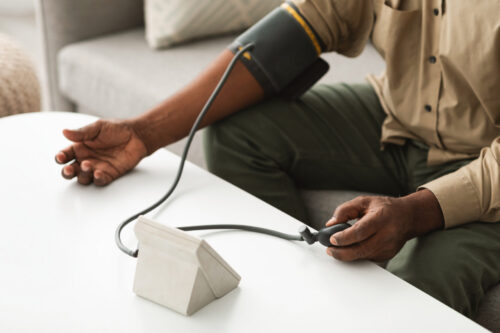
For patients managing hypertension, regular remote blood pressure monitoring and monthly outreach allow care teams to detect medication effectiveness and adherence issues between visits. For patients with diabetes, ongoing education, medication monitoring, and care coordination help reinforce the daily self-management behaviors that determine long-term outcomes. Patients managing heart disease or COPD benefit from RPM-supported monitoring that can detect early signs of decompensation before they become acute, with meta-analytic evidence showing RPM reduced heart failure hospitalizations by 20%.
For patients with multiple chronic conditions, the value compounds. These patients have more complex care plans, more medications to manage, more specialists to coordinate with, and a higher risk of hospitalization. Structured, ongoing engagement addresses each of those dimensions in a way that episodic care cannot.
ChartSpan’s Chronic Care Management (CCM) program is designed for Medicare patients with two or more chronic conditions and includes proactive outreach, care coordination, medication support, appointment scheduling, and follow-up on tests and referrals. For practices that need to strengthen continuity of care without overextending internal staff, that operational support can make a CCM program more sustainable.
How remote patient monitoring bridges the gap between visits
Remote Patient Monitoring (RPM) is one of the clearest examples of hybrid care operating as intended. Rather than waiting for a scheduled appointment to assess how a patient is doing, RPM provides objective clinical data between visits. Blood pressure readings, blood glucose levels, daily weight measurements: these give care teams ongoing visibility into patient status without requiring an encounter.
Without RPM, changes in a patient’s health may go undetected until the next appointment, unless identified through other means such as patient calls or portal messages. With it, care teams can act earlier, when the intervention is more straightforward and less costly.
RPM also supports patient accountability. When patients monitor their own metrics daily, they become more engaged participants in their care. That active involvement reinforces the self-management behaviors that chronic disease management depends on, and it creates a consistent feedback loop between the patient and their care team.
The data RPM generates informs the clinical decisions made during in-person encounters and telehealth follow-ups, making those visits more targeted and productive. It reduces reliance on episodic care by ensuring that the time between appointments is not clinically silent.
How hybrid care creates recurring reimbursement opportunities
Without a sustainable reimbursement structure, the between-visit engagement that makes hybrid care effective is difficult for most practices to maintain. Fortunately, Medicare has developed programs specifically designed to reimburse the ongoing care activities that occur outside of traditional office visits.
Care management programs that support recurring reimbursement
Traditional fee-for-service reimbursement is built around encounters, which works for acute care but creates a misalignment for chronic disease management. The between-visit activities that patients with complex chronic conditions need were historically difficult to bill for. Practices either absorbed the cost or did not provide the service, creating a system that reimbursed the visit but not the continuity that drives outcomes.
Chronic Care Management (CCM), Advanced Primary Care Management (APCM), and RPM resolve this misalignment by creating reimbursement pathways for ongoing care activities outside of traditional encounters. Reimbursable services include:
- Care coordination
- Care plan development and maintenance
- Remote monitoring
- Preventive care engagement
- Ongoing patient communication
For many practices, the challenge is building the workflows required to identify eligible patients, maintain documentation, complete monthly engagement, and submit compliant claims consistently.
ChartSpan’s managed CCM and APCM programs are designed to support that full operational cycle, helping practices translate reimbursement opportunities into a sustainable care model.
Common challenges in implementing a hybrid care model
Building a functional hybrid care model requires more than selecting the right programs. The operational execution is where most practices encounter friction, and understanding those challenges in advance allows for more realistic planning.
Technology integration and workflow compatibility
Running CCM, APCM, and RPM alongside telehealth and in-person care involves multiple platforms, data streams, and documentation requirements. Electronic Health Record (EHR) compatibility, data synchronization between RPM devices and care management platforms, and consistent documentation workflows all require deliberate planning.
When these systems are not well-integrated, data becomes siloed. A care coordinator may not have visibility into a patient's recent RPM readings when conducting a monthly outreach call. A billing team may not have access to the documentation needed to support a claim. Fragmented data undermines the continuity the model is designed to create.
Billing complexity and documentation requirements
CCM, APCM, and RPM each carry distinct documentation requirements, and running all three simultaneously adds meaningful administrative complexity.
- CCM requires monthly time tracking and documented non-face-to-face care management
- APCM requires accurate patient stratification by condition count and QMB status and documented non-face-to-face care management
- RPM requires device setup, ongoing data transmission, and compliance with coding requirements related to data review and patient communication
Errors in patient stratification or incomplete time records create compliance risk and increase the likelihood of claim denials. For practices without dedicated care management staff or billing infrastructure, maintaining accuracy across all three programs is a significant operational challenge.
This is often where partnership matters most. ChartSpan supports practices with enrollment, monthly engagement (including interpretation of RPM data), documentation, compliance support, and billing workflows for CCM and APCM, helping reduce the administrative strain that can otherwise limit program performance.
Maintaining the provider-patient relationship
A reasonable concern with hybrid care is that increasing the share of virtual and remote interactions may weaken the provider-patient relationship over time. That risk is real if the model is implemented without intention.
Hybrid care is designed to complement in-person care, not displace it. In-person visits establish the clinical relationship and address the care needs that require face-to-face interaction. Between-visit programs sustain that relationship by keeping patients connected and supported. When in-person encounters serve as the anchor and remote engagement serves as the continuity layer, the provider-patient relationship is strengthened, supporting both clinical outcomes and patient retention.
How ChartSpan helps practices extend care beyond the office visit
A functional hybrid care model requires reliable execution across in-person care, telehealth, and continuous remote care management, backed by infrastructure that sustains engagement and drives clinical and financial results for Medicare chronic care populations.
The between-visit gap is where outcomes are shaped and where most operational strain occurs. Running Chronic Care Management (CCM), Advanced Primary Care Management (APCM), and Remote Patient Monitoring (RPM) together demands precise patient stratification, compliant documentation, coordinated outreach, and accurate billing—work that can overextend clinical staff without dedicated support.
ChartSpan simplifies this with a fully managed model. Our Chronic Care Management (CCM) program handles patient identification and enrollment, monthly outreach, care coordination, medication support, documentation, and CMS-aligned billing. Our Advanced Primary Care Management (APCM) program extends those services to a broader Medicare population with stratified service levels, transition support, ongoing patient communication, and coordinated primary care engagement.
We combine dedicated care coordinators, structured workflows, HETS access for accurate QMB identification, automated discharge alerts for transitional care, and RapidBill™ integration for billing accuracy. This creates a connected, year-round care experience that expands your capacity while preserving the provider relationship that anchors it.
If you're evaluating how to build or strengthen a hybrid care model at your practice, contact us to learn more about how ChartSpan's full-service CCM and APCM programs can support your practice.
You may also like:
Subscribe for More Insights
Get valuable resources delivered straight to your inbox.
"*" indicates required fields